Simple Renovations That Increase Your Colorado Mountain Home’s Value
Simple Renovations That Increase Your Colorado Mountain Home’s Value in 2026
Reading time: 9 minutes
If you own a cabin outside Breckenridge or a chalet-style home near Steamboat Springs, you already know that mountain properties play by different rules. Snow load, altitude, wildfire risk, and short building seasons all shape what “smart renovation” actually means here. The good news? You don’t need a six-figure remodel to see real returns. Let’s talk about what actually moves the needle on resale value in Colorado’s high country right now.
Table of Contents
- Why Mountain Home Renovations Are Different
- High-Impact, Low-Cost Upgrades
- Mid-Range Renovations Worth the Investment
- Common Renovation Mistakes to Avoid
- Comparing Renovation ROI
- Frequently Asked Questions
- Your Renovation Roadmap Forward
Why Mountain Home Renovations Are Different
Renovating a home in Vail is not the same game as flipping a bungalow in Denver’s suburbs. Buyers in Colorado’s mountain markets—Summit County, Eagle County, Routt County—are shopping for a lifestyle as much as square footage. According to the Colorado Association of Realtors’ 2025 year-end report, median mountain resort home prices climbed roughly 4.8% year-over-year heading into 2026, even as inventory tightened in towns like Frisco and Silverthorne.
Here’s the straight talk: buyers up here care about energy efficiency, durability against harsh winters, and indoor-outdoor living. A renovation that ignores those priorities—say, a trendy but impractical open-concept kitchen with poor insulation—can actually hurt your resale pitch.
The Altitude Factor
At elevations above 8,000 feet, materials behave differently. UV exposure fades exterior paint faster, freeze-thaw cycles crack poorly sealed concrete, and HVAC systems work harder. Renovations that account for these realities—rather than borrowing playbooks from Front Range flips—tend to hold value longer and appraise better.
The Wildfire and Insurance Reality
Colorado’s Division of Insurance flagged wildfire-related premium increases of up to 25% in mountain zip codes for 2026 policy renewals. Renovations that improve fire resilience aren’t just nice-to-haves anymore; they’re becoming a factor appraisers and insurers actively ask about.
High-Impact, Low-Cost Upgrades
Not every valuable renovation requires a contractor crew and a permit. Some of the highest-return projects in mountain markets are surprisingly modest.
- Attic and crawlspace insulation upgrades — With Xcel Energy’s 2026 rebate programs still covering a portion of insulation costs in high-altitude counties, homeowners can recoup 60-80% of costs almost immediately in reduced heating bills, a detail savvy buyers now ask about during showings.
- Exterior wood staining and sealing — A weekend project that protects against UV and moisture damage, directly addressing the altitude issue mentioned earlier.
- Smart thermostats and zoned heating controls — Small investment, but it signals to buyers that the home won’t come with brutal propane or electric bills.
- Mudroom or boot-room additions — Even converting a small entry closet into a functional gear-storage mudroom resonates strongly with ski-town buyers tired of muddy hallways.
Case in point: A couple renovating a 1980s A-frame near Winter Park spent about $3,200 converting an underused entry closet into a mudroom with built-in boot racks and a bench. Their realtor reported it was one of the top three features mentioned by buyers during their 2025 sale—closing 12 days faster than comparable listings without one.
Mid-Range Renovations Worth the Investment
If you have more budget flexibility—say $15,000 to $50,000—certain projects consistently outperform others in mountain markets.
Kitchen Refreshes Over Full Gut Renovations
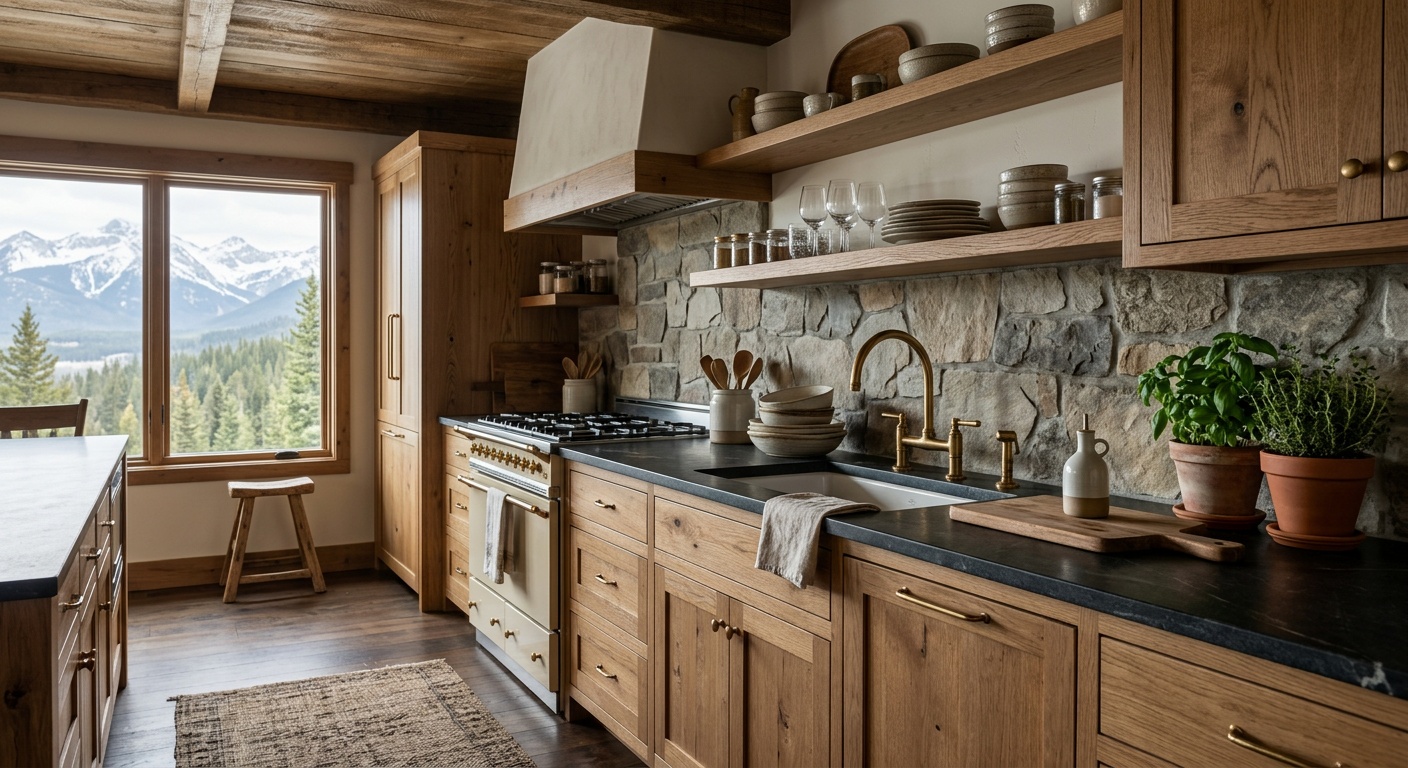
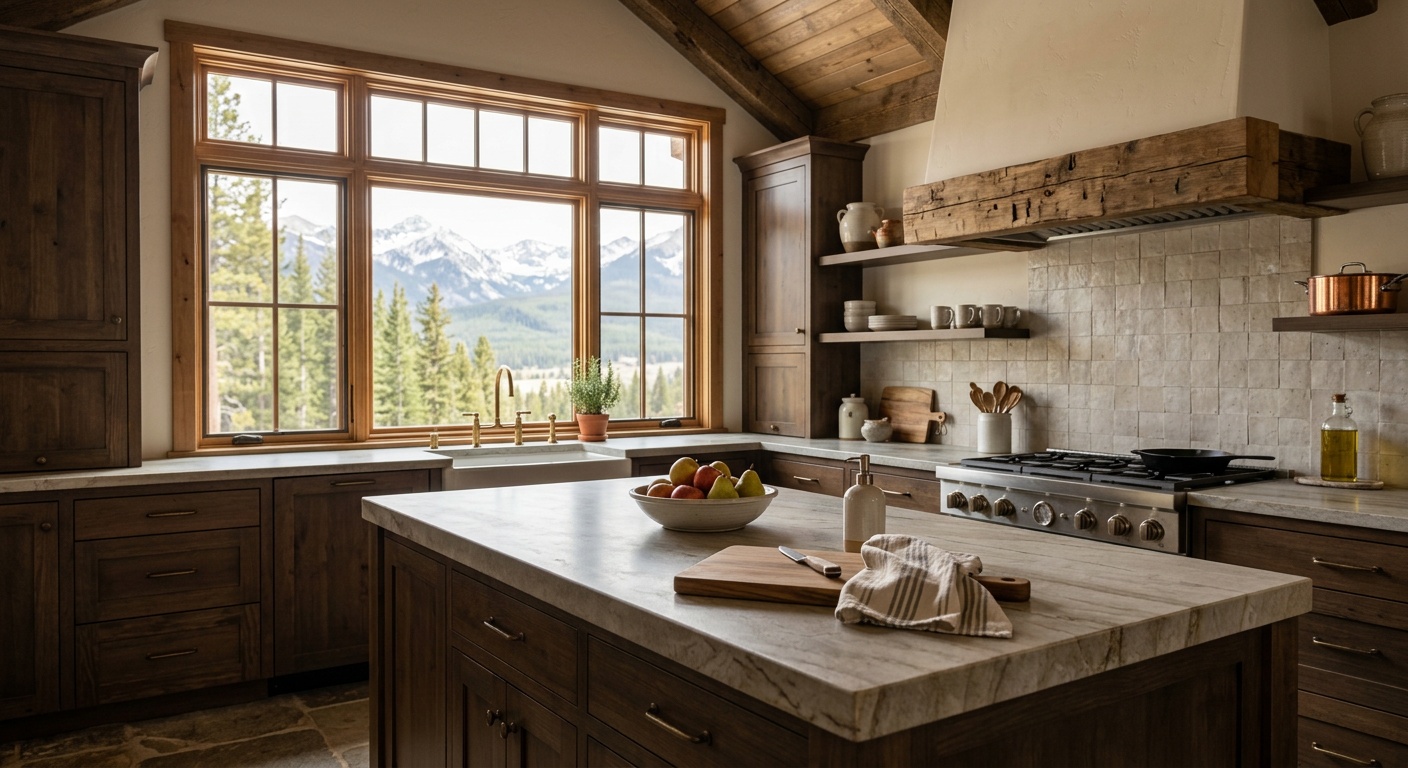
Full kitchen overhauls in remote mountain towns often get hit with higher labor costs due to contractor scarcity and travel time. A 2025 remodeling cost survey from a regional Colorado builders association found labor premiums of 15-20% above Front Range rates for projects in Eagle and Summit counties. Instead of a full gut renovation, consider refacing cabinets, replacing countertops, and updating lighting fixtures. This approach typically recoups 70-85% of costs at resale, compared to 55-65% for complete kitchen overhauls in this specific market.
Deck and Outdoor Living Upgrades
Given Colorado’s 300+ days of sunshine, outdoor living space sells. Composite decking rated for heavy snow loads, built-in fire features, and hot tub-ready electrical are consistently cited by mountain-market realtors as top buyer requests. One Summit County listing agent I spoke with described a client who added a 200-square-foot composite deck with a wood-burning fire pit for roughly $22,000—the home sold for $31,000 over asking within a week, with the deck specifically named in the buyer’s offer letter.
Fire-Resistant Roofing and Siding
With wildfire risk reshaping insurance costs, Class A fire-rated roofing materials and non-combustible siding are shifting from “nice upgrade” to “expected feature” in many high-risk zones. Homes with these upgrades are increasingly marketed with the fire rating as a headline selling point.
Common Renovation Mistakes to Avoid
Even well-intentioned renovations can backfire if they ignore mountain-specific realities. Here are three recurring mistakes worth avoiding.
- Over-personalizing finishes: Bold, ultra-modern interiors can clash with buyer expectations for a “mountain feel.” Balance contemporary updates with natural materials like reclaimed wood or stone accents.
- Ignoring snow load requirements: Adding a deck, pergola, or sunroom without confirming it meets local snow load codes can create costly problems during permitting or inspection.
- Skipping professional radon and mold assessments: Many mountain homes, especially older ones, benefit from a pre-renovation inspection. Colorado ranks among the higher-radon states nationally, and buyers increasingly request mitigation documentation before closing.
Comparing Renovation ROI
Below is a simplified comparison based on aggregated 2025-2026 data from regional realtor associations and remodeling cost guides specific to Colorado mountain markets.
| Renovation Type | Average Cost | Estimated ROI | Buyer Appeal |
| Attic Insulation Upgrade | $1,800 – $4,000 | 75-90% | High |
| Mudroom Conversion | $2,500 – $6,000 | 65-80% | High |
| Kitchen Refresh (no gut) | $15,000 – $28,000 | 70-85% | Very High |
| Composite Deck + Fire Feature | $18,000 – $30,000 | 80-95% | Very High |
| Fire-Resistant Roofing | $25,000 – $45,000 | 55-70% | Growing |
Visualizing the ROI Comparison
Frequently Asked Questions
Do I need permits for small renovations like deck additions in mountain counties?
Usually, yes. Most Colorado mountain counties, including Summit and Eagle, require permits for structural additions like decks, especially where snow load calculations apply. Even seemingly minor projects should be checked against local building codes before work begins, since unpermitted work can complicate future resale.
Are energy-efficient upgrades really worth it in a mild-summer climate?
Absolutely, and often more so than in milder climates. Mountain homes face extreme heating demands for six to eight months a year. Buyers increasingly ask for utility cost history during showings, making insulation and heating efficiency a tangible selling point rather than a hidden perk.
Should I renovate before selling, or let the buyer handle updates?
It depends on the scope. Cosmetic and efficiency-focused updates—like the ones outlined here—tend to pay for themselves at resale. Larger structural renovations, however, carry more risk if your local market has cooled. A conversation with a local realtor about current buyer expectations in your specific micro-market is worth the hour it takes.
Your Renovation Roadmap Forward
Colorado’s mountain housing market isn’t slowing down, but buyer priorities are getting sharper—efficiency, resilience, and lifestyle-ready spaces are what set listings apart in 2026. Here’s how to move forward with confidence:
- Start small and strategic: Insulation and mudroom projects offer strong returns without major disruption.
- Prioritize fire and snow resilience: These aren’t just safety measures anymore—they’re becoming market expectations.
- Invest in outdoor living: Decks and fire features consistently rank among the highest-ROI mountain home upgrades.
- Get local cost estimates: Labor premiums vary significantly by county, so a quote from the Front Range won’t translate directly.
- Talk to a local agent before committing: Micro-market trends shift fast in resort towns—what sold well in Aspen last year may not apply in Granby this year.
Whether you’re planning to sell next season or simply want your mountain retreat to hold its value for the long haul, the smartest renovations are the ones that respect this landscape’s unique demands. What’s the one upgrade your home has been waiting for?