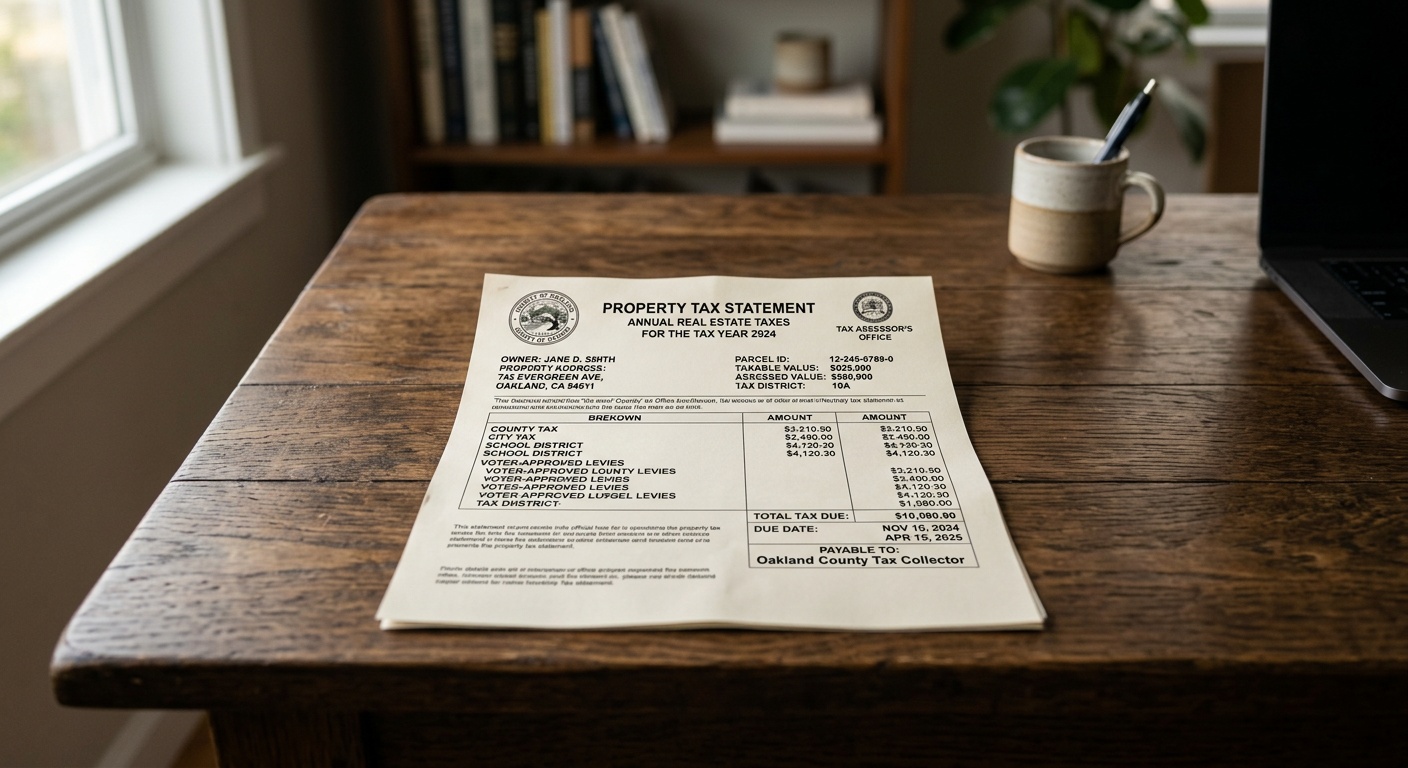
Assessed Value Versus Taxable Value for Colorado Homeowners Explained

Assessed Value Versus Taxable Value for Colorado Homeowners Explained
Reading time: 8 minutes
Table of Contents
- The Basics: Two Numbers, One Confusing System
- What Is Assessed Value in Colorado?
- What Is Taxable Value—And Why It’s Smaller
- The Math: From Market Value to Your Tax Bill
- Common Challenges Homeowners Face
- 2026 Assessment Rate Comparison
- How to Challenge Your Assessment
- Frequently Asked Questions
- Your Roadmap Forward
The Basics: Two Numbers, One Confusing System
Ever opened your Colorado property tax notice and wondered why there are two completely different dollar figures staring back at you? You’re not alone. Every year, thousands of homeowners across the Front Range and mountain communities call their county assessor’s office asking the same question: “Which number actually determines what I owe?”
Here’s the straight talk: Colorado’s property tax system deliberately separates assessed value from taxable value, and understanding the gap between them is the difference between confidently reviewing your tax bill and feeling blindsided every January.
Quick Scenario: Imagine your home in Arvada was recently valued at $525,000 by the county assessor. That’s not what you’re taxed on. Not even close. Let’s dive into why, and how the numbers actually connect.
What Is Assessed Value in Colorado?
In most states, “assessed value” is essentially the market value. Colorado does things differently. Here, assessed value is calculated by applying a state-set assessment rate to your property’s actual value (which is essentially the market value determined during reappraisal).
Colorado reassesses property every odd-numbered year, meaning the values used for 2026 taxes were actually set during the 2025 reappraisal cycle, based on sales data collected between January 2024 and June 2025. If you’ve watched Denver-metro home prices climb and plateau over the past two years, you already know this lag matters—your 2026 assessed value may not reflect current 2026 market conditions at all.
The Assessment Rate Formula
For residential property in 2026, the assessment rate sits at 6.7% for most homeowners, following adjustments made under recent Colorado legislation (Senate Bill 24-233 and related property tax relief measures passed in 2024-2025 special sessions). That means:
Actual Value × Assessment Rate = Assessed Value
So a home valued at $525,000 multiplied by 6.7% produces an assessed value of $35,175. That’s the number your county uses as the foundation—but it’s still not your tax bill.
What Is Taxable Value—And Why It’s Smaller
Here’s where most homeowners get tripped up. “Taxable value” in everyday conversation often gets used interchangeably with assessed value, but Colorado’s system layers in additional reductions before your local mill levies ever get applied.
Since 2023, Colorado has implemented a series of temporary value reduction measures designed to cushion homeowners from rapid market appreciation. For the 2026 tax year, most primary residences receive a flat exemption subtracted from actual value before the assessment rate is applied—currently set at $55,000 for qualifying owner-occupied homes under the state’s ongoing property tax relief framework.
Working Through a Real Example
Let’s go back to that $525,000 home in Arvada:
- Step 1: Subtract the $55,000 exemption: $525,000 – $55,000 = $470,000
- Step 2: Apply the 6.7% residential assessment rate: $470,000 × 0.067 = $31,490
- Step 3: This $31,490 is your taxable assessed value—the figure multiplied by local mill levies to generate your actual bill
Compare that to a straightforward assessed value calculation without the exemption ($35,175), and you can see the relief measure saves this homeowner roughly $3,685 in assessed value, translating to real savings once mill levies are applied.
The Math: From Market Value to Your Tax Bill
Once you have taxable value, the final step involves your local mill levy—a rate set by school districts, municipalities, special districts, and counties. One mill equals $1 of tax per $1,000 of taxable value.
Dr. Elena Kowalski, a former county assessor consultant who now advises Colorado homeowner associations, puts it this way: “People fixate on the assessed value because it feels like the ‘official’ number, but the mill levy is where the real variation happens. Two identical homes on opposite sides of a school district boundary can have tax bills that differ by hundreds of dollars annually.”
If our Arvada home sits in a taxing district with a combined mill levy of 85 mills, the calculation looks like this: $31,490 ÷ 1,000 × 85 = $2,676.65 in annual property tax.
Why This Two-Step System Exists
Colorado’s Taxpayer’s Bill of Rights (TABOR) and the Gallagher Amendment’s legacy (repealed by voters in 2020 but still shaping policy conversations) created a structural need to control how quickly residential taxes could rise relative to actual home values. The layered exemption-plus-assessment-rate approach is essentially a policy tool lawmakers use to soften the blow during years of rapid appreciation, like Colorado experienced from 2020 through 2023.
Common Challenges Homeowners Face
Well, understanding the formula is one thing—applying it to your own situation is another. Here are the three challenges I hear about most often from Colorado homeowners:
Challenge 1: Outdated Actual Value Assumptions
Because reappraisals happen every two years, your 2026 actual value reflects a sales window that closed over a year ago. If your neighborhood has cooled since then, you might be paying tax on a value higher than what your home would sell for today. Actionable tip: Pull comparable sales from your specific micro-neighborhood (not just your zip code) before assuming your assessment is accurate.
Challenge 2: Confusing Multiple Exemption Programs
Colorado offers the Senior Property Tax Exemption, the Disabled Veteran Exemption, and the general homeowner relief exemption—and they don’t all stack the same way. Actionable tip: Contact your county treasurer’s office directly rather than relying on generic online calculators, since exemption eligibility and amounts can shift year to year based on state budget allocations.
Challenge 3: Missing the Appeal Window
Colorado’s appeal period is notoriously short—typically just 30 days after Notices of Valuation are mailed in May of reappraisal years, though informal review requests can sometimes be filed even in off-years if you believe an error exists. Actionable tip: Mark your calendar the moment you receive any valuation notice; don’t wait to “get around to it.”
2026 Assessment Rate Comparison
To put residential rates in perspective, here’s how Colorado’s assessment rates compare across property types for the 2026 tax year:
Notice the massive gap between residential rates and commercial/vacant land rates. This is intentional policy—Colorado has consistently favored owner-occupied housing with dramatically lower assessment percentages than business or undeveloped property.
| Metric | 2024 Tax Year | 2026 Tax Year |
|---|---|---|
| Residential Assessment Rate | 6.4% – 6.7% (varied) | 6.7% (standardized) |
| Primary Residence Exemption | $40,000-$50,000 | $55,000 |
| Reappraisal Cycle | 2023 base data | 2025 base data |
| Statewide Median Home Value | ~$538,000 | ~$519,000 |
| Appeal Window | 30 days (May-June) | 30 days (May-June) |
How to Challenge Your Assessment
If you believe your actual value is inflated, you have real recourse—but the process demands precision. Start with an informal review through your county assessor’s office, which costs nothing and often resolves straightforward errors like incorrect square footage or misapplied comparable sales.
If that doesn’t resolve things, you can escalate to the County Board of Equalization, then the Board of Assessment Appeals at the state level, and ultimately district court if necessary. Most homeowners never need to go beyond the first two steps.
Practical Roadmap for Appeals:
- Pull your Notice of Valuation and verify the listed square footage, lot size, and bedroom/bathroom count against reality
- Gather three to five comparable sales from your immediate neighborhood within the assessor’s data window
- Submit your protest before the deadline—typically documented directly on the notice itself
- Attend or call in for your scheduled hearing with organized, printed documentation
- If denied, decide whether the potential tax savings justify continuing to the county board level
Frequently Asked Questions
Is assessed value the same as what I could sell my home for?
No. Assessed value is a fraction of your home’s “actual value” (roughly comparable to market value), calculated by applying the state assessment rate. Your home’s actual value might be $500,000, but its assessed value—used purely for tax calculations—would be around $33,500 at the 6.7% rate.
Why did my taxable value change even though my actual value stayed the same?
This usually happens when exemption amounts or assessment rates shift due to new legislation. Colorado lawmakers have adjusted both figures multiple times since 2023 as part of ongoing property tax relief efforts, meaning your taxable value can move even without a new reappraisal.
Do renters ever deal with assessed or taxable value?
Indirectly, yes. Landlords factor property tax obligations into rent pricing, and multi-family residential properties are assessed using the same 6.7% rate as single-family homes in 2026, though the exemption typically doesn’t apply to non-owner-occupied units.
Your Roadmap Forward
Colorado’s property tax structure isn’t going to simplify anytime soon—if anything, the layered exemptions and periodic legislative adjustments since 2023 suggest more complexity, not less, as lawmakers continue balancing revenue needs against homeowner relief. Understanding the distinction between assessed and taxable value isn’t just academic; it’s the foundation for catching errors, planning your annual budget, and knowing when an appeal is worth your time.
- Review your Notice of Valuation the moment it arrives—don’t let the 30-day appeal window slip past you
- Calculate both numbers yourself using the actual value, exemption amount, and assessment rate to verify your county’s math
- Check your mill levy against neighboring districts if you’re house-hunting, since this varies more than most buyers realize
- Ask about exemption stacking if you’re a senior, veteran, or disabled homeowner—you may qualify for more relief than you’re currently claiming
- Set a calendar reminder for the next reappraisal cycle in 2027 so you’re prepared rather than surprised
At the end of the day, this is your money and your home—shouldn’t you understand exactly how that number on your tax bill came to be? Take twenty minutes this month to pull your own valuation notice and run the numbers yourself. You might be surprised what you find.